May 11, 2026
Buy Now, Pay Later in Bahrain: Convenience or Financial Risk?
Mr. Ali Haji

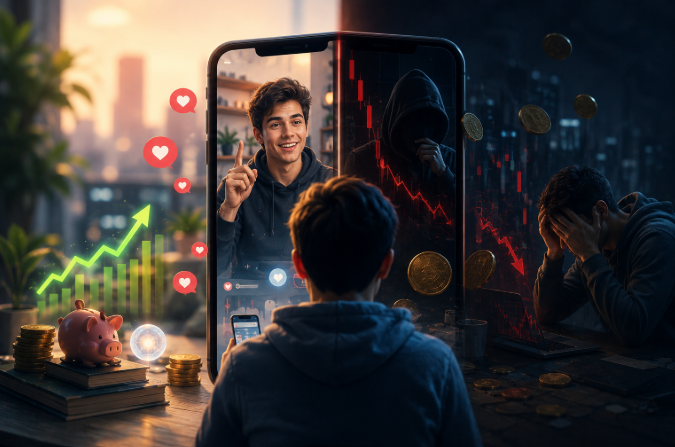
Explore how social media is changing investing habits among young people, making finance more accessible while also creating new financial risks and misinformation challenges.
Let’s be honest — learning about investing today looks very different from the past.
A few years ago, people learned about finance from banks, financial advisors, business news channels, or university courses. But today? Many young people are learning about money from TikTok videos, Instagram reels, YouTube shorts, and social media influencers.
In just 30 seconds, someone online can tell viewers:
These influencers are often called finfluencers — financial influencers who create online content about investing, saving, trading, and personal finance.
At first glance, this seems like a good thing. Financial knowledge is becoming more accessible, especially for younger generations. But there’s also a growing concern: are social media platforms creating smarter investors… or encouraging risky financial behavior?
As fintech and digital investing continue to grow across Bahrain and the GCC, this question is becoming increasingly important.
In simple terms, a finfluencer is someone who shares financial advice or investment-related content on social media platforms.
This can include:
Some finfluencers are licensed professionals with real financial expertise. Others are simply content creators sharing opinions, trends, or personal experiences.
The challenge is that online audiences often cannot tell the difference between qualified financial advice and entertainment.
That’s where the risks begin.
Social media changed the way people consume information.
Instead of reading long financial reports or watching business news, younger audiences now prefer:
Platforms like TikTok and Instagram made finance feel less intimidating. Suddenly, investing looked simple, exciting, and accessible to everyone.
Several factors helped fuel this trend:
In many ways, social media made investing feel more like entertainment than finance.
To be fair, finfluencers are not entirely bad.
In fact, some creators are helping improve financial awareness among younger generations. Many people are learning basic concepts online for the first time, including:
This is especially important because many schools and universities still provide limited financial education.
For some young people, social media became their first introduction to personal finance.
Finfluencers also help make financial discussions more relatable and easier to understand. Instead of complicated banking language, they explain concepts in a simple and engaging way.
That accessibility is one reason why financial content continues to grow rapidly online.
This is where things become more complicated.
Social media platforms are designed to maximize attention and engagement — not accuracy.
That means dramatic investment predictions often spread faster than balanced financial advice.
For example, some influencers may promote:
The problem is that many followers trust influencers without verifying information independently.
And unlike professional financial advisors, many finfluencers are not regulated.
As a result, financial misinformation can spread very quickly online.
Younger audiences are often the most active users of TikTok, Instagram, and online trading platforms.
At the same time, many young investors:
This creates a dangerous combination.
When people constantly see videos about others making quick profits, investing can start to feel easy and risk-free.
But the reality is very different.
Financial markets are unpredictable, and many investments promoted online carry serious risks. Some users may invest money they cannot afford to lose simply because an influencer made something look profitable.
This is why emotional investing has become a growing concern.
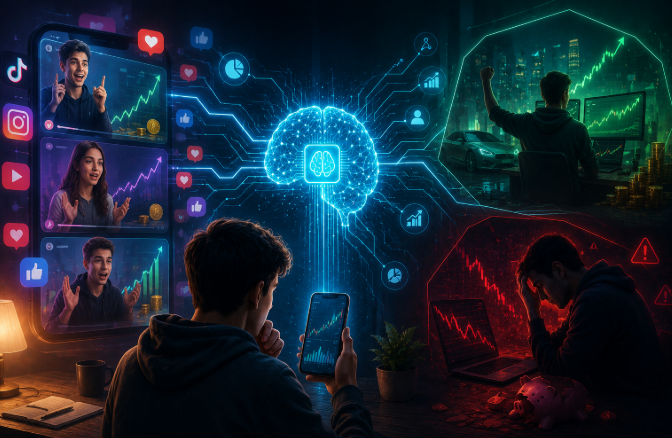
Artificial intelligence also plays a major role in this new financial environment.
Social media platforms use AI algorithms to decide what content users see. These algorithms are designed to keep users engaged for as long as possible.
If someone watches one investing video, the platform may start recommending:
Over time, users can become trapped inside a financial echo chamber where they only see one type of opinion or trend.
AI is also being used in fintech apps themselves. Many investment platforms now use AI for:
While AI improves convenience, it also raises concerns about manipulation, misinformation, and impulsive investing behavior.
We have already seen cases where social media significantly affected financial markets.
Online communities and influencers have contributed to:
In some cases, prices increased rapidly simply because influencers promoted them online — not because the investment had strong financial value.
This creates unstable and emotional markets where trends can change overnight.
For inexperienced investors, that can lead to major financial losses.
As finfluencers continue to grow, governments and financial regulators around the world are paying closer attention.
Important questions include:
In Bahrain and across the GCC, regulators are also focusing more on digital finance and consumer protection.
The challenge is balancing innovation and financial education with responsible online behavior.
Because while social media can improve financial awareness, it can also spread dangerous misinformation very quickly.
The honest answer is: it depends on how people use the information.
Some financial influencers genuinely help audiences learn about money, saving, and investing. They make finance more approachable and encourage financial awareness among younger generations.
But others may prioritize views, popularity, or profit over responsible financial advice.
That’s why consumers must think critically before following online investment trends.
Watching a viral TikTok video does not replace proper financial research.
And just because someone looks successful online does not mean their advice is safe or reliable.
Social media is transforming the way people learn about finance and investing.
Finfluencers, TikTok traders, and online financial communities are reshaping modern investing culture — especially among younger generations in Bahrain and around the world.
This new digital financial environment offers both opportunities and risks.
On one hand, financial education has become more accessible than ever before. On the other hand, misinformation, emotional investing, and online hype can lead to serious financial mistakes.
The future of digital investing will depend on one key factor: financial awareness.
Because in today’s world, the biggest investment risk may not be the market itself… it may be blindly trusting what appears on your social media feed.
A finfluencer is a social media influencer who shares content related to investing, saving, trading, or personal finance.
They make financial topics easier to understand through short videos, relatable content, and simple explanations.
Some are licensed professionals, but many are not officially regulated financial advisors.
AI algorithms recommend financial content based on user behavior, which can influence investment decisions and trends.
Yes. Financial misinformation, hype-driven investing, and emotional decision-making can lead to significant financial losses.
Mr. Ali Haji
Gulf University
Last Updated: 11 May 2026