May 11, 2026
Finfluencers and TikTok Traders: Smarter Investors or a Financial Disaster?
Mr. Ali Haji

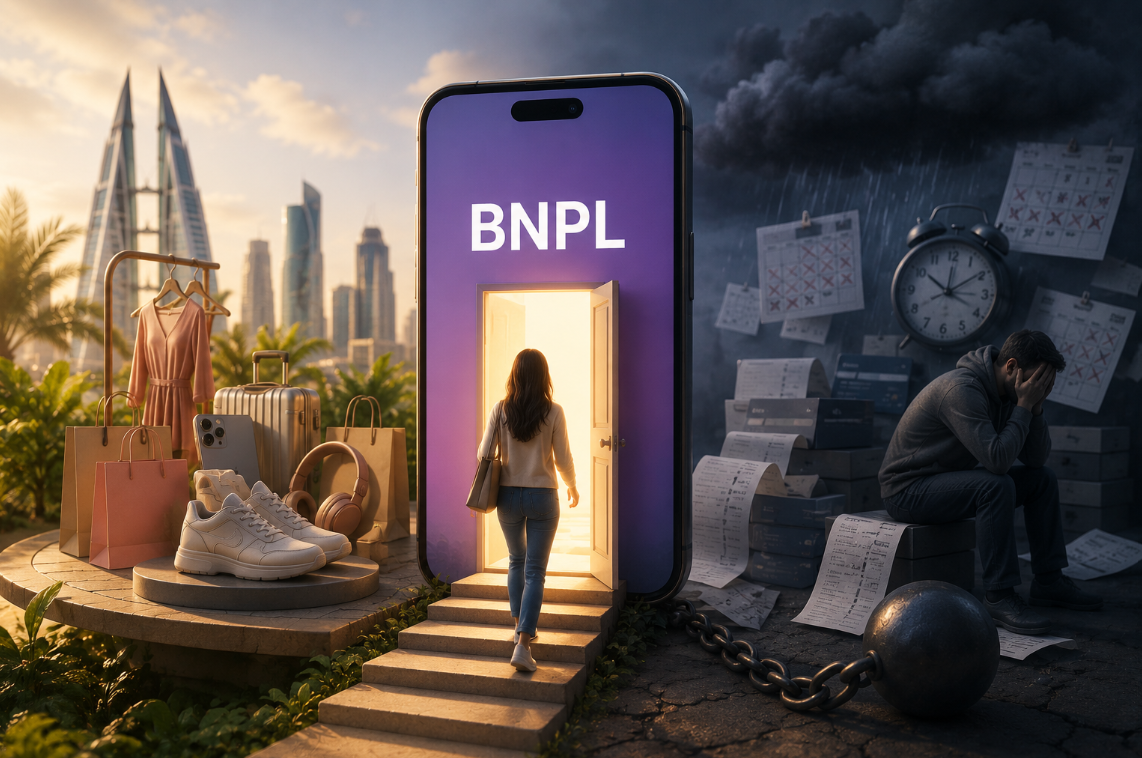
Explore how BNPL is changing shopping in Bahrain, offering convenience to consumers while also raising concerns about debt, spending habits, and financial responsibility.
Let’s be honest — shopping today has never been easier. From smartphones and fashion to travel bookings and electronics, consumers can buy almost anything with a few taps on their screens. But behind this convenience, a new payment habit is growing quickly: Buy Now, Pay Later, or BNPL.
BNPL allows shoppers to purchase products immediately and pay for them in smaller installments over time. It sounds simple, flexible, and even stress-free. But is it really helping people manage their money better, or is it quietly encouraging overspending and debt?
As Bahrain continues to grow as a regional fintech hub, BNPL services are becoming more visible across digital platforms and online stores. This raises an important question: is BNPL a smart financial tool, or a hidden risk for consumers?
In simple terms, Buy Now, Pay Later is a digital payment method that lets consumers buy something today and pay for it later in installments.
For example:
Unlike traditional loans, BNPL is designed to feel fast and easy. In many cases, approvals happen within seconds, and users do not need to go through long bank procedures or use a credit card. That is one reason BNPL has become popular among younger consumers and online shoppers.
Around the world, companies such as Klarna, Afterpay, and Affirm have changed the way people shop. In the GCC, platforms like Tamara and Tabby have also gained strong attention. Bahrain is now becoming part of this wider trend.
Bahrain has positioned itself as one of the leading fintech and digital banking hubs in the region. With strong internet use, growing e-commerce activity, and rising mobile payment adoption, the country is well placed for digital financial services to expand.
Several factors are driving BNPL growth in Bahrain:
A major development came in 2024, when the Central Bank of Bahrain granted the Kingdom’s first official BNPL license to Tamara Bahrain. This was an important step for Bahrain’s fintech sector and showed that BNPL is becoming part of the country’s financial ecosystem.
At first glance, BNPL feels attractive because it reduces the pressure of paying a large amount all at once. Instead of paying 400 BHD immediately, a customer may only need to pay 100 BHD each month. That can feel much easier psychologically.
Here are some of the main reasons consumers use BNPL services:
This is where BNPL becomes more complicated. While it looks harmless on the surface, one of its biggest risks is that debt can feel invisible. Consumers often focus on the small monthly payment and ignore the full amount they are committing to.
For example, someone may use BNPL for:
Each payment may seem manageable on its own, but together they can create serious financial pressure.
That is why many people describe BNPL as a digital debt trap. What begins as convenience can quickly turn into stress when multiple payment plans overlap.
BNPL affects consumer behavior in powerful ways. When people pay with cash or a card in full, they immediately feel the cost of the purchase. But installment payments make the financial pain feel smaller and less immediate.
As a result:
This is especially concerning for younger consumers, who may not yet have strong budgeting habits. Small payments can look harmless, but they can add up very quickly. What feels affordable today may become difficult to manage tomorrow.
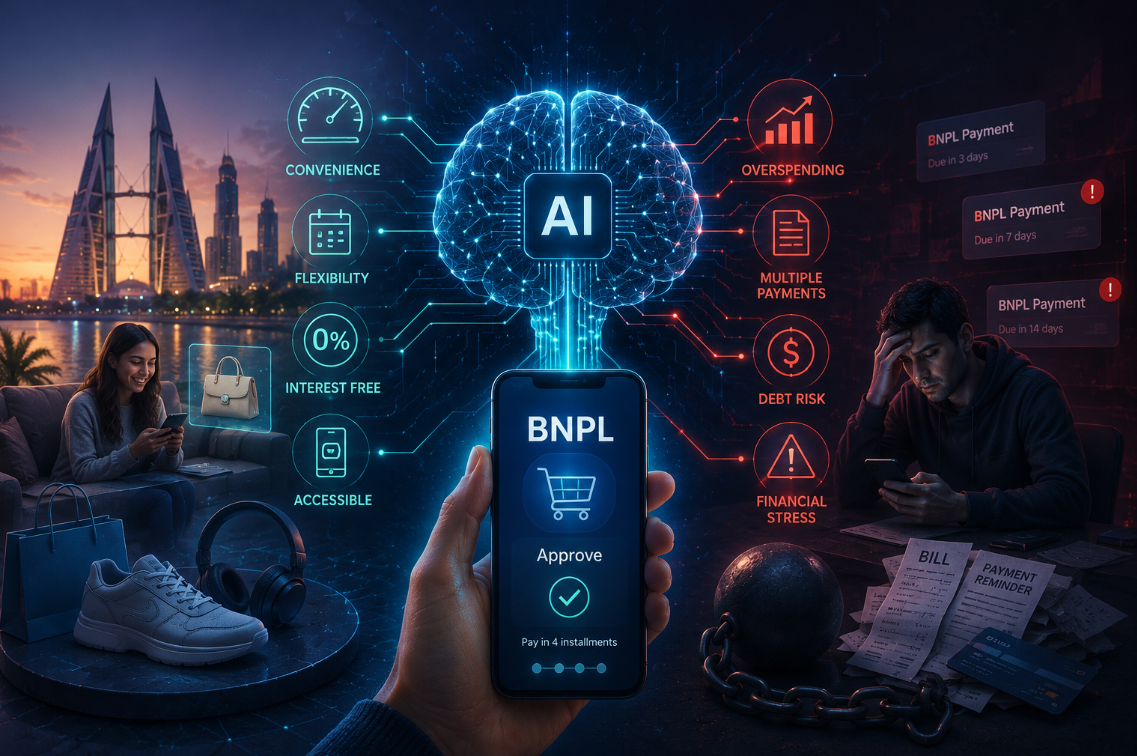
Artificial intelligence is also connected to modern BNPL systems. Many fintech companies use AI to analyze spending behavior, assess repayment risk, approve transactions within seconds, and detect fraud.
AI helps make BNPL faster and more efficient. However, it also creates new concerns. Some experts worry that AI-driven systems may encourage overspending by constantly making installment payments easier to access. Others raise concerns about data privacy and possible algorithmic bias.
So while AI improves convenience, it also introduces ethical and regulatory questions that cannot be ignored.
As BNPL grows, regulation becomes increasingly important. Without proper oversight, consumers may face financial risks that are difficult to control.
In Bahrain, the Central Bank plays a key role in balancing innovation with consumer protection. Regulators must support fintech growth while also protecting people from excessive debt and unfair practices.
Important questions include:
These questions will become even more important as digital finance continues to expand across Bahrain and the wider GCC region.
The honest answer is: it depends on how it is used.
For responsible consumers, BNPL can be a useful tool. It can help manage cash flow, offer flexibility, and improve access to products and services. But for people who overspend or fail to keep track of repayments, BNPL can quickly become a source of financial stress.
Like many fintech innovations, BNPL is neither fully good nor fully bad. The real issue is financial awareness. Consumers need to remember that installment payments are still a form of debt. Smaller payments do not make the obligation disappear.
Buy Now, Pay Later is changing the way people shop in Bahrain. It is fast, flexible, and convenient. As the country continues to strengthen its position as a fintech leader in the GCC, BNPL services are likely to become even more common in everyday life.
But convenience always comes with responsibility. While BNPL offers real benefits, it also creates financial risks, especially for younger consumers who may underestimate the long-term impact of installment-based spending.
The future of BNPL in Bahrain will depend on one key factor: finding the right balance between innovation and financial responsibility.
Because sometimes, “Buy Now, Pay Later” can quietly become: “Buy Now, Stress Later.”
BNPL stands for Buy Now, Pay Later. It allows consumers to purchase products immediately and pay in installments over time.
Yes. BNPL services are growing in Bahrain, and companies like Tamara have officially entered the market.
Many BNPL services offer interest-free installments if payments are made on time. However, late fees or penalties may apply.
Consumers like BNPL because it offers flexibility, fast approvals, and smaller monthly payments.
It can be. If consumers use multiple installment plans or spend beyond their budget, BNPL may lead to financial stress and debt accumulation.
Mr. Ali Haji
Gulf University
Last Updated: 11 May 2026