March 26, 2026
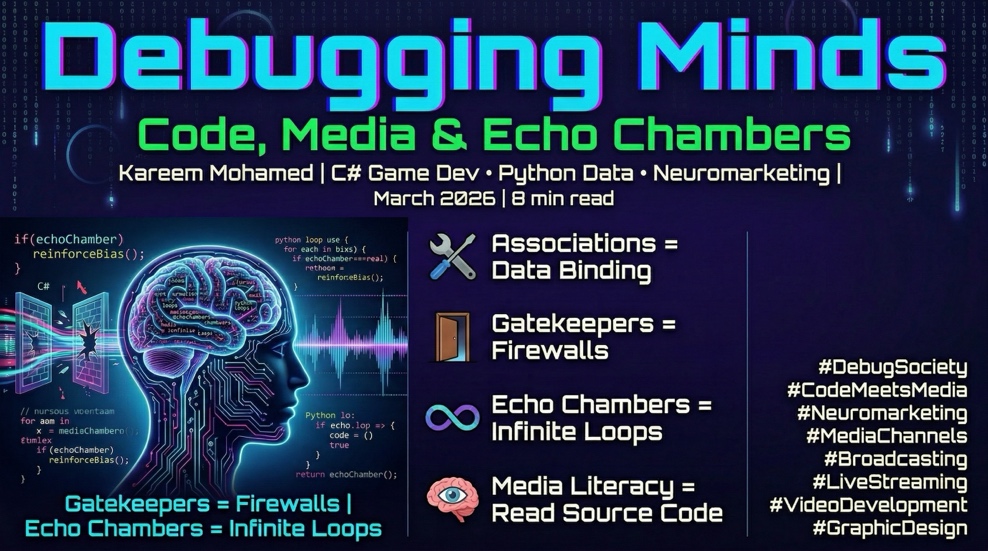
Debugging Minds: Code, Media & Echo-Chambers
Kareem Mohamed

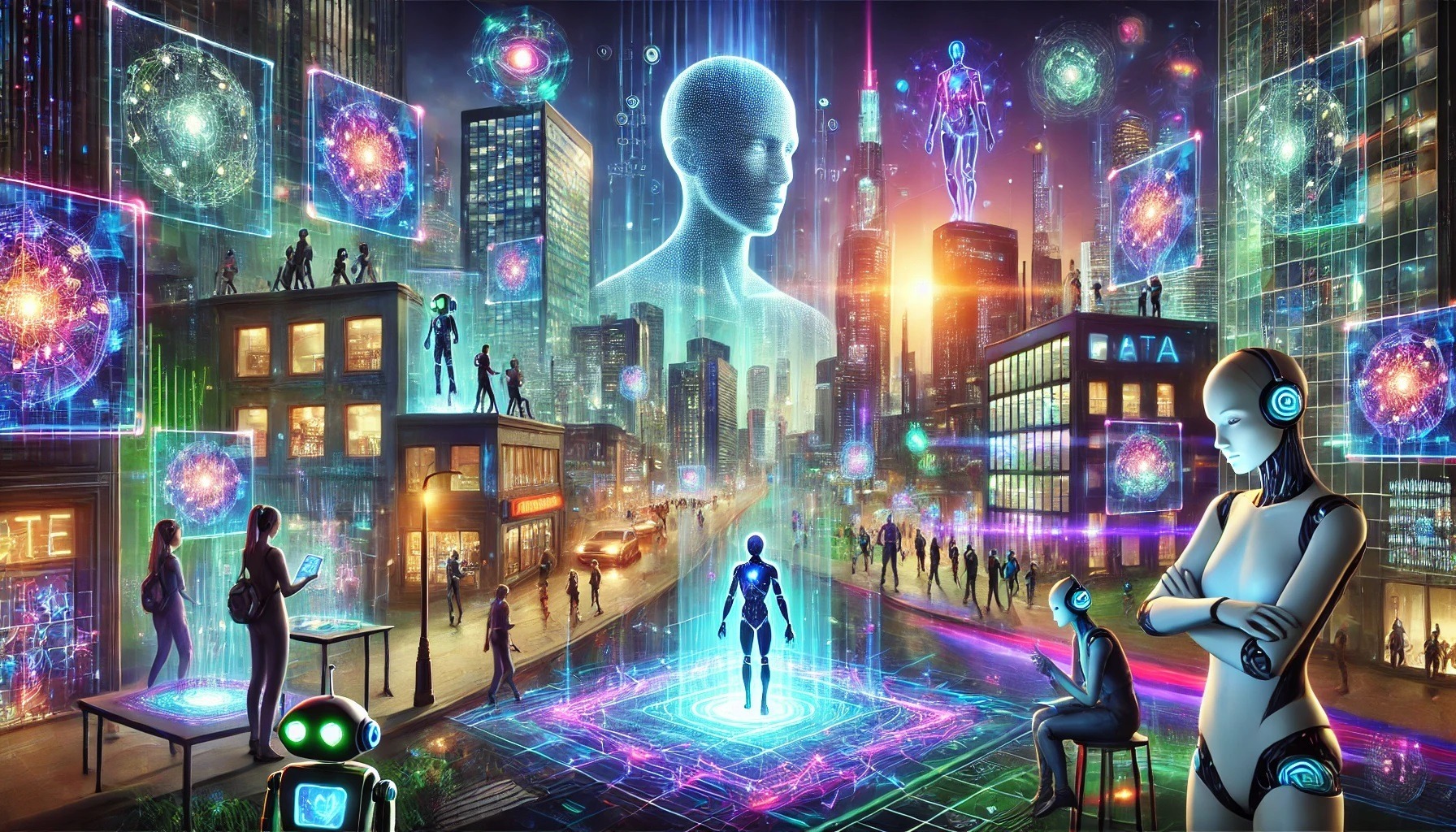
AI-generated content now blurs indistinguishably from human work across code, media, and marketing—welcome to hyperreality where authenticity is obsolete.
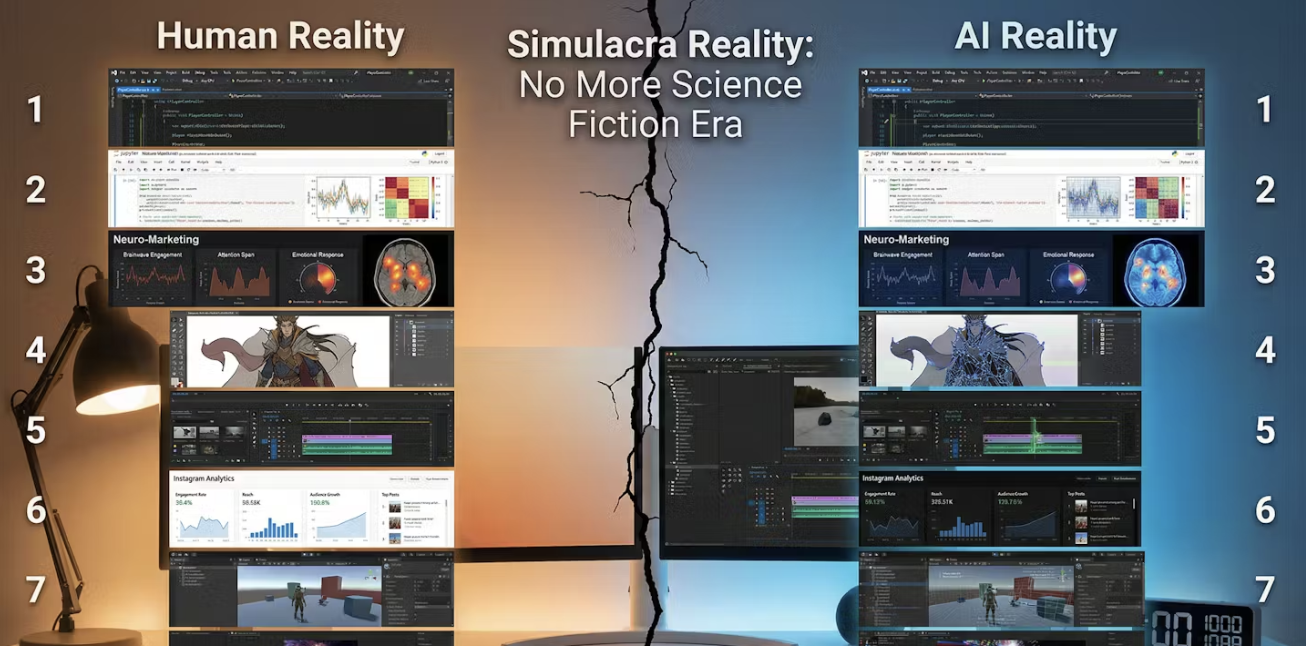
What if you couldn’t tell if code was written by a senior C# engineer or GPT-5? We’re past science fiction: Python analysis, video edits, and neuromarketing campaigns achieve perfect indistinguishability. Baudrillard’s simulacra has arrived—outputs exist without originals.
Code reviews once caught AI; now syntax, patterns, and edge cases are flawless. Graphic tools like Freepik match Adobe masters; Runway edits rival Premiere Pro. Portfolios on Behance could be Midjourney+ChatGPT.
Python pandas can’t distinguish real from synthetic consumer data. Neuromarketing heat maps yield identical A/B results from human or AI simulations. Statistical parity erodes authentication.
Press releases read the same from humans or Jasper.AI. Viral content spreads via AI optimization; echo chambers amplify regardless of source. Human intuition fails against mastered imperfections.
Programmers trace execution; reality debugging fails with fabricated logs. No objective ground truth remains. The debugger becomes untrustworthy.
Shift value to architecture over implementation, strategic vision over execution, cultural forecasting over production. Treat reality probabilistically; verify incentives, not creators.
Embrace lived experience and peer networks as authenticity markers. In hyperreality, process imperfections and community validation trump artifact analysis. Humans retain cultural context no AI simulates.
In hyperreality, process imperfections and community validation trump artifact analysis. Humans retain cultural context no AI simulates.
Kareem Mohamed
Lecturer, Communication and Media Technologies — Gulf University
Last Updated: 09 Apr 2026